

The Knowles-Nelson Stewardship Program is in jeopardy. Wisconsin lawmakers must act.
"If you care about access to public land, about hunting and fishing traditions, about the outdoor economy that supports small-town Wisconsin, now is the moment to speak up."
The Recombobulation Area is a 19-time Milwaukee Press Club award-winning opinion column and online publication founded by longtime Milwaukee journalist Dan Shafer. The Recombobulation Area is now part of Civic Media.
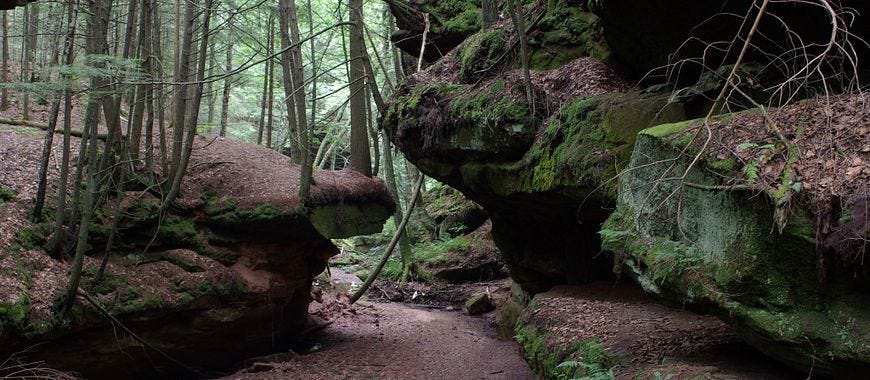
If you’ve ever sat in a tree stand during hunting season — sitting quietly and waiting, your breath hanging in the cold air — you know land isn’t abstract in Wisconsin. If you’ve ever stood in a river in July, casting a line and watching the current move past your boots, you know public access isn’t theoretical. And if you’ve ever piled the kids into the car and headed to a county park just to let them run wild for a while, you’ve benefited from decisions made in Madison decades ago.
That’s why what just happened at the Capitol should make all of us pause for a second.
The Knowles-Nelson Stewardship Program, one of the most durable and broadly-supported conservation programs in Wisconsin’s history, is in real jeopardy.
This didn’t happen because the voters demanded it. Nor because the coalition behind it fell apart. This is happening because inside the Capitol, the Republican caucus can’t agree on what to do next with a program that most Wisconsinites support.
That’s… notable.
To understand why this moment matters, it helps to remember what Knowles-Nelson actually is.
Created in 1989 and deliberately named after Republican Governor Warren Knowles and Democratic Governor Gaylord Nelson, the program was built as a bipartisan conservation compact that has helped Wisconsin protect more than 750,000 acres of land for almost 40 years. It has expanded access for hunting and fishing. It has helped build trail systems. It has protected the habitat that supports our outdoor economy.
Usually a program with that kind of track record moves through reauthorization without much drama. This time, it didn’t.
Late last week, Senate Republicans pulled a scheduled floor vote on their stewardship extension bill after it became clear they didn’t have enough votes inside their own caucus to pass it.
I don’t get to the Capitol much nowadays, but I know enough to understand that’s the tell. When leadership quietly takes something off the calendar, it usually means the vote count came up short. And outside groups are now confirming what many insiders suspected.
According to a statement from Gathering Waters, which represents 40 non-profit conservation organizations, Republicans pulled the proposal after failing to secure enough internal support. During that same floor session, State Sen. Jodi Habush Sinykin offered a simple amendment: extend the program for one year while negotiations continue.
Senate Republicans rejected it without debate.
It’s important to be clear about what did — and did not — happen here.
This was not Democrats blocking the bill on the floor. The majority party simply couldn’t unify its own members and that distinction is going to matter as the rhetoric ramps up in the coming weeks. This isn’t over, although we will be seeing the effects in different ways.
Technically, the current program as it stands runs through June 30 — but folks who have watched these fights before know the real impacts start well before any official deadline.
But here’s the part that matters most right now: the window to act has not closed.
Legislators still have time before the Senate adjourns on March 19 to bring a stewardship compromise to the floor. In other words, the current impasse is not inevitable; it’s a choice. And historically in Wisconsin, public outcry has helped to bring resolutions to issues like this.
At this stage in such a stewardship program, with reauthorization getting shaky this late in session, we will start to see a ripple effect — agencies slow their planning, local governments hesitate to line up matching funds, conservation partners grow more cautious about long-term deals. Nothing shuts off overnight. But it does start to stall.
So how did we get here?
To understand the stalemate, it helps to walk through the timeline of what’s actually happened over the past year.
In his last budget proposal, Gov. Evers included a full reauthorization of the Stewardship Program for 10 years at $100 million annually. Republican lawmakers removed the program from the budget entirely.
Last fall, Senate Democrats returned with a scaled-back compromise: six years at $72 million per year. Republicans responded with a much smaller counterproposal of a two-year reauthorization at $28 million annually, paired with significant new limits on the program’s land acquisition authority. Conservation groups warned those limits would fundamentally weaken how the program works.
So, the gap between the parties has been clear for months. But the policy tension underneath this fight didn’t appear overnight.
For years, some Republican lawmakers — mostly from northern Wisconsin — have argued that too much land has been taken off local property tax rolls. Concern about rural tax pressure is real, and it deserves an honest conversation, but at the same time, the broader narrative that Knowles-Nelson is somehow swallowing the Northwoods doesn’t match the numbers. The math ain’t mathing, as they say.
Statewide, land conserved through the program averages about 1% of total acreage, according to a recent analysis. Even in Assembly districts most often cited in the debate, land directly tied to Knowles-Nelson generally remains under 5% — with federal land and county forests making up much larger shares of public ownership.
Layered on top of those long-running tensions was a more recent shift that changed the political dynamics inside the Capitol.
Last year, the Wisconsin Supreme Court ruled that lawmakers could no longer use passive review (essentially an anonymous objection) to quietly block individual stewardship projects. Since that ruling, support among some Republican members has cooled noticeably.
The Assembly’s response was to pass a proposal that technically extends the program, but sharply limits its land acquisition authority, thus preserving the framework of Knowles-Nelson while tightening the screws underpinning it.
Democrats and most conservation groups argue that without meaningful acquisition authority, the program stops functioning the way it was designed to.
And that’s where the stalemate sits now.
To really understand the stakes, though, it’s worth paying attention to who is sounding the alarm.
Ducks Unlimited, one of the most respected conservation groups among hunters and outdoorsmen, warned last week that Wisconsin is on track to become the first state in recent memory to let a long-standing, widely popular conservation program lapse.
Todd Schubring, Ducks Unlimited’s Wisconsin policy chair, said the Senate’s failure to pass reauthorization “simply does not reflect the values of Wisconsinites,” even as the group thanked Republican authors Sen. Patrick Testin and Rep. Tony Kurtz for trying to move a compromise forward.
That mix of concern and appreciation tells us something important about where things stand.
There is broad public support and bipartisan bill authors. There are national conservation groups urging action. And still, the votes aren’t quite there.
Please understand: if lawmakers leave town without a deal, the damage won’t come all at once. It will come slowly. Fewer projects will move forward. Local partners will grow more cautious. By the time the deadline hits, the program could already be running on fumes.
For communities across northeast Wisconsin, this isn’t abstract policy churn. It’s access to public land and hunting traditions handed down through generations. It’s tourism dollars that keep small businesses afloat.
For many rural counties without a large tax base, stewardship funding has long helped pool statewide resources for local land and recreation projects that would otherwise be out of reach.
I’ll leave you with this: despite the growing rhetoric, there is still time to get this done before March 19 — if lawmakers are willing to come back to the table and do the work of governing.
That’s where the public comes in.
If you care about access to public land, about hunting and fishing traditions, about the outdoor economy that supports small-town Wisconsin, now is the moment to speak up — especially to Republican state senators who hold the keys to whether or not a compromise moves forward.
Wisconsin has never struggled to find common ground on conservation when the pressure is there. The question now is whether that bipartisan muscle memory is still strong enough to carry this program across the finish line. The decisions made now could determine whether the next generation climbing into that treestand or packing a picnic for the county park will inherit less access than we did.
Gaylord Nelson once warned that “The ultimate test of man’s conscience may be his willingness to sacrifice something today for future generations whose words of thanks will not be heard.”
The question now is whether or not that kind of conscience still has a home in Madison.
Read more from Emily Tseffos at The Recombobulation Area:


Subscribe to The Recombobulation newsletter here and follow us on Facebook and Instagram at @ therecombobulationarea.
Already subscribe? Get a gift subscription for a friend.
Part of a group who might want to subscribe together? Get a group subscription for 30% off!
Follow Dan Shafer on Twitter at @DanRShafer and at BlueSky at @danshafer.bsky.social.
 | A guest post by
|
Thank you for this well written piece at a critical moment in Wisconsin. It is widely felt that our public spaces and open access to them is not a political issue, yet some continue to make everything political, even programs like Knowles-Nelson that has functioned beautifully for YEARS. The list of projects made possible in my County is long and with tighter and tighter local government budgets, there will be no place to turn when we need something for our local parks and trails. I hope everyone will make those phones in Madison RING!