

Wisconsin has a historic surplus. Let’s use it to lower costs now and stop creating bigger bills later.
Big under-the-radar news arrived in Wisconsin last week, when budget projections showed the state will be bringing in $1.53 billion more than expected. How should the state use it?
The Recombobulation Area is a 19-time Milwaukee Press Club award-winning opinion column and online publication founded by longtime Milwaukee journalist Dan Shafer. The Recombobulation Area is now part of Civic Media.
With everything else happening around the world, you may have missed a major headline here in Wisconsin — one that’s already turning into a political football. The Legislative Fiscal Bureau now projects the state will end the 2025–27 biennium with a $2.37 billion general fund balance. That’s $1.53 billion more than expected when the budget passed. And, as usual, both parties are already racing to take credit.
But here’s what most Wisconsinites will hear when they see that number: Give our money back.
And I get it. For most families, the state’s “general fund balance” isn’t something you see. What you see is the envelope on the kitchen table — an escrow notice, the property tax bill, the referendum flyer from your child’s school, the grocery receipt making you do a double take. You see it in the quiet math you do in your head: what can wait, what can’t, what gets cut this month.
When people live with the stress of all of those things, a surplus doesn’t feel like “good news.” It feels like proof the system is taking more than it should, and still not delivering stability where it matters.
The problem is that “giving it back” can turn into a shell game if we’re not careful. If lawmakers use this moment for short-term tax cuts while refusing to fix the underlying pressures driving costs — as they’ve done for years — we’ll be right back here a year from now. People will still be paying more. Communities will still be scrambling. Politicians will still be blaming someone else.
We’ve got a historic surplus. Let’s use it to lower costs now and stop creating bigger bills later.
There’s a part that Madison doesn’t like to say out loud: Wisconsin’s budget can look “healthy” while people feel stressed because the burden doesn’t show up as a state line item a lot of the time. Sometimes, it shows up in your kid’s classroom. Or, it shows up when your city or township can’t keep staff, keep programs open, keep emergency services, or maintain buildings and roads without begging voters for funding every spring.
The loudest voices who too often are preaching “discipline” and “fiscal responsibility” are often the same ones who created a system where local property taxpayers are forced to pick up the tab for basic public services. School districts aren’t going from referendum to referendum because they’re reckless, they’re doing it because costs and needs continue to rise and the state keeps acting like inflation shouldn’t apply to classrooms. That’s been the reality for more than 15 years (with no end in sight.)
Last week, Republican state Rep. Mark Born and state Sen. Howard Marklein, the co-chairs of the powerful budget-writing Joint Committee on Finance, credited GOP “fiscal discipline,” while warning Wisconsinites not to commit to “ongoing spending using one-time money.” Yes, caution matters. But what they’re really saying is: don’t use new revenue to fix the systems that are breaking.
If Wisconsin truly has room to breathe, then we have to answer the obvious questions: why are our schools still scraping by? Why are working parents still drowning in childcare costs? Why are communities unable to make ends meet? A surplus doesn’t automatically mean Wisconsin is thriving. It can also mean Madison is stockpiling flexibility while families absorb the pain.
And instead of treating this surplus as a chance to stabilize the system, Republicans are already signaling they want to reopen old political fights — including repealing Gov. Tony Evers’ “400-year veto,” a move that gave school districts more flexibility to keep up with inflation and avoid constant crisis budgeting. That push isn’t coming from nowhere. It’s coming from the same top-down leadership that has controlled the Legislature for years: Assembly Speaker Robin Vos and Senate Majority Leader Devin LeMahieu.

This particular fight isn’t really about a sneaky veto. It’s about whether local communities can respond to real-world costs or whether Republican leadership keeps districts on a short financial leash and calls it “responsible.”
It’s important to note as well that Wisconsinites are already bracing for uncertainty from Washington, D.C., as they look toward higher costs for healthcare and groceries, dismantled safety nets, and federal programs and grants that families rely on suddenly disappearing. As the federal government abdicates its duty, states either step up and stabilize people’s lives…or they shove costs down the ladder and tell local taxpayers to figure it out.
I fear Wisconsin will be the latter.
People deserve relief. But “give it back” has to mean lowering costs in a way that doesn’t break our schools, weaken our communities, and raise property taxes again next year. This leaves us all worse off and costs us all more in the long run.
Wisconsin families deserve real relief this time, not the kind Republicans campaign on and then quietly design to disappear a year later. If lawmakers are serious about lowering costs, they ought to stop treating public schools and local services like bargaining chips and start to build a system that doesn’t force our communities into constant crisis.
There is a way to reduce the pressure on property taxpayers and invest in what keeps Wisconsin towns and cities strong: schools that work, childcare families can afford, and the basic stability that makes communities safer and healthier.
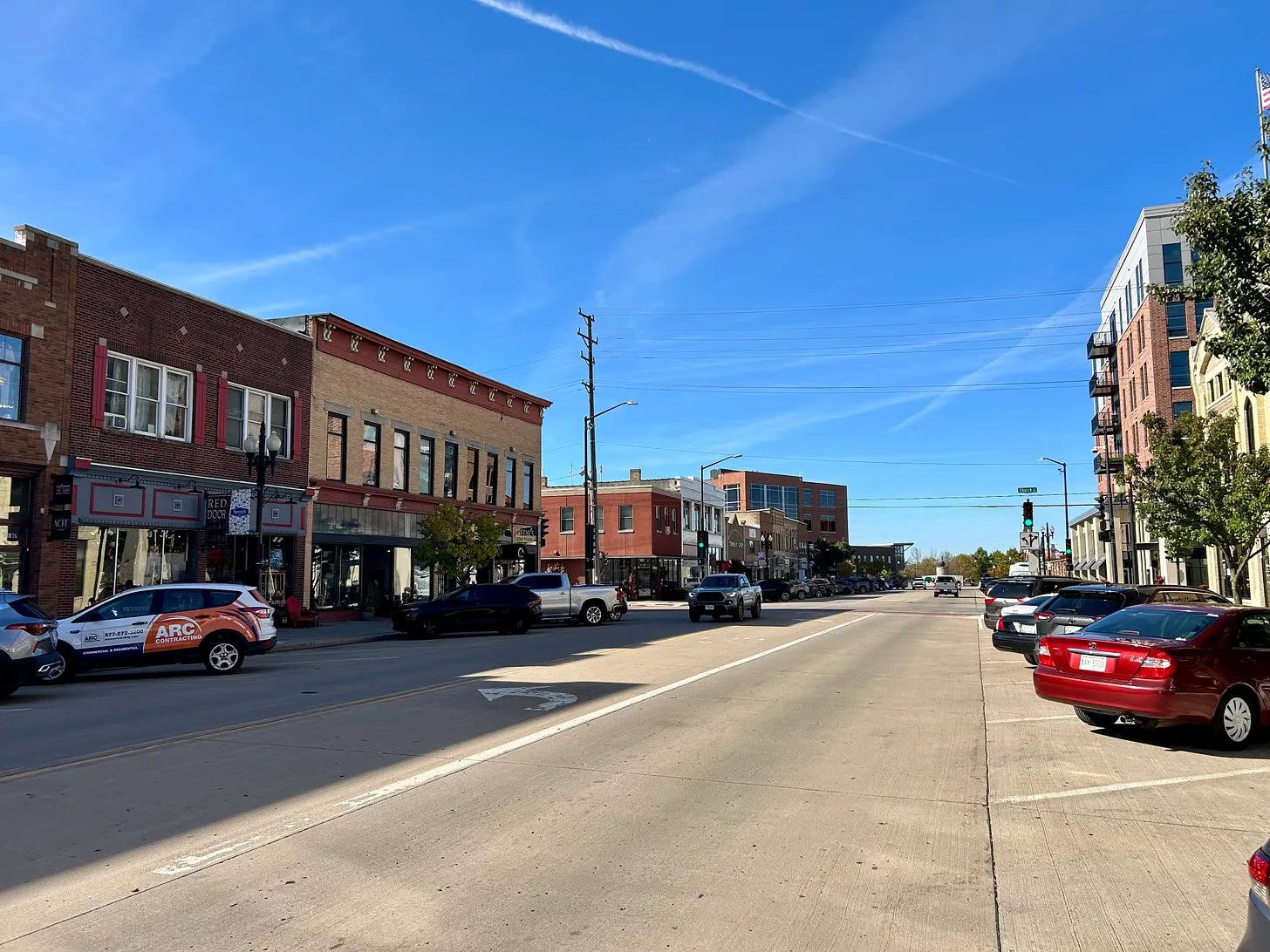
It’s not “big government.” It’s just good governing. Money in Madison doesn’t mean a thing if it never makes it back to Main Street.

Tune in on Wednesday, Jan. 21, to watch the Main Street Governor Candidate Forum on the Civic Media YouTube Channel.
Read more from Emily Tseffos at The Recombobulation Area:


Subscribe to The Recombobulation newsletter here and follow us on Facebook and Instagram at @ therecombobulationarea.
Already subscribe? Get a gift subscription for a friend.
Part of a group who might want to subscribe together? Get a group subscription for 30% off!
Follow Dan Shafer on Twitter at @DanRShafer and at BlueSky at @danshafer.bsky.social.
 | A guest post by
|
Appreciate your thoughtful break down on the issue and the problems facing WI.
I agree with the conclusions at the end on priorities for the funding. Interesting that some of the highest fundraising dem candidates for governor have no intention of addressing any of that. Looking at Roys, Brennan, Rodriguez, Hughes.
Hong is the only way