

Running on values: What candidates for governor can learn from Chris Taylor
Taylor's landslide victory came in running a different kind of campaign, one unabashedly running on her values. Candidates running for governor should take note.
The Recombobulation Area is a 19-time 21-TIME! Milwaukee Press Club award-winning opinion column and online publication founded by longtime Milwaukee journalist Dan Shafer. The Recombobulation Area is now part of Civic Media.
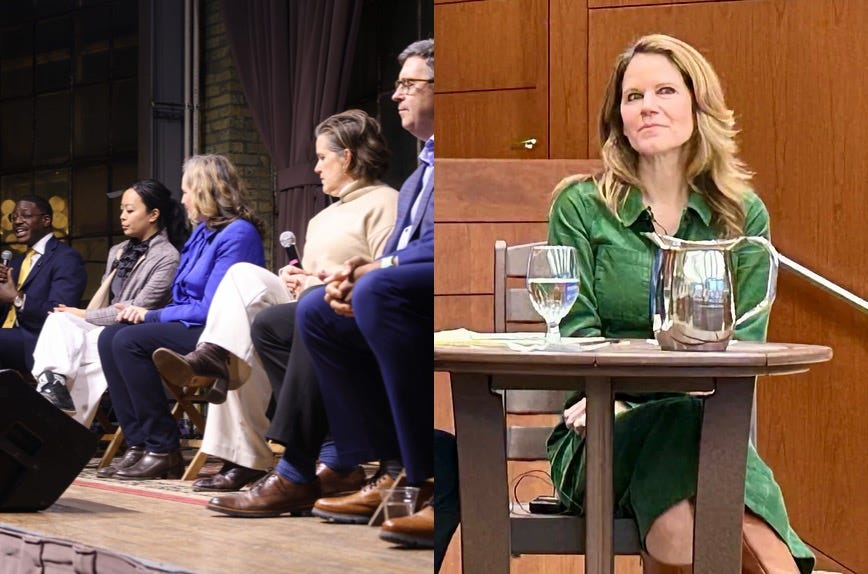
In the 2026 Spring Election in Wisconsin, Judge Chris Taylor won with more than 60% of the vote in her bid for a seat on the Wisconsin Supreme Court. Being that Wisconsin’s statewide elections can often be decided by a single percentage point, this felt significant.
I actually spoke to Judge Taylor back before she announced her campaign and expressed my concerns about dog whistles and “tough on crime” messaging in past campaigns. She told me she wanted to run a different kind of campaign.
In past campaigns, voters were met with a barrage of TV ads and mailers that painted each candidate as “soft on crime.” The Wisconsin Supreme Court has little to do with crime in our neighborhoods, but you wouldn’t know that based on many recent campaigns. Research and polling have shown that these messages are not effective. Oftentimes, these messages are racist and feed into stereotypes that put communities of color at risk. Last year, I saw more people on social media and my non-political friends mentioned their frustration over the violent ads more than ever before. It felt like a tipping point. So, it was refreshing to hear that Taylor wanted to run a different type of campaign — and the election results prove that you can actually run on your values and win.
We now have our first candidate who has announced for next year’s state Supreme Court race, Lyndsey Brunette, current Clark County Circuit Court judge and previously the Clark County District Attorney. Already, there has been some criticism. In 2013, when she was the Clark County DA, she said a police officer was justified in their use of deadly force.
This is already raising concerns and questions about whether this is the candidate the Democratic Party of Wisconsin will get behind. There is an opportunity to think outside of the box and add diversity to the court. Pedro Colon1, District 1 Court of Appeals judge, and Judge Everett Mitchell, Dane County Circuit Court judge, are both being mentioned as potential candidates.
There is a lot to unpack with Taylor’s win, but one of the main takeaways is that the formula for winning isn’t just filled with former prosecutors and DAs who run “tough on crime” ads. We can break out of the cookie cutter campaigns that have dominated previous elections.


Perhaps this being a relatively “safe” election for the Democratic-aligned candidate — no outsized spending from the likes of Elon Musk, ideological control of the court not being at stake, a significant fundraising advantage, etc. — meant a candidate like Taylor could take certain risks in the campaign. But even if it wasn’t a “safe seat,” can we still take “risks” and run on our values instead of compromising for the sake of winning?
This is worth considering for future elections in Wisconsin, especially when it comes to primaries. After Annette Ziegler, a right-wing justice, announced she wouldn’t be seeking another 10-year term on the court, we have an open race for state Supreme Court in spring 2027 — and there will likely be a primary. We also can take these lessons as we head into the August partisan primary in the race for governor. Primaries allow people to vote their values. Electability isn’t always a part of a voter’s analysis. In this race, voters have a range of strong candidates to choose from. The primary is an opportunity to really differentiate yourself from the field.
Candidates should lean into their progressive values, especially if it brings in new voters. Voters want to be excited about a candidate. In this political climate, excitement is a rare commodity — but one that should be embraced.
From the archives:

Throughout my career as an organizer, I have heard time and time again about how we may need to run from our values in order to win. I was told once by a campaign manager that “we just need them to win now and they can be progressive later.” This does not help excite the base that you need to turn out and win.
Wisconsin has a long history of progressive values and it is core to who we are. We don’t need to run away from our values in order to win. This goes for where, regionally, certain messages can be expressed, too. A constant theme we’re hearing in so many organizing meetings is the idea that you need to have a “Black Milwaukee message” but it should be different (and sometimes in conflict) with other messages throughout the state. We don’t need to run a “Milwaukee only message” and then change messages for the rest of the state. Whether you’re in the northwoods or on the North side, people are struggling. Everyone is dealing with the gas prices and the effects of the war in Iran, or struggling with issues like child care, housing, access to affordable healthcare, and so much more — no matter where you live. Speak to the people. It is a crowded gubernatorial primary, but that just means there’s more opportunity to create your own lane and stand out.

Candidates should not throw Milwaukee under the bus for the sake of winning votes in the rest of the state — specifically Black and Brown Milwaukee. We are incredible voting blocs that you can’t win without. Speak to us. Speak to working class people. Speak to the people who are curious about what Democratic Socialism is, but then also speak to the people whose first protest was No Kings — and everyone in between.
There is a moment here. The moment is to embrace the frustration. Embrace the imperfection. The real way to win is to have clarity on the points of common ground but then to educate and organize further discussion.
Following Chris Taylor’s victory, there is a moment to strip away labels and have conversations around values. We can have robust conversations about police accountability and affordability, and demand more from our candidates. We don’t need to negotiate against ourselves and talk about “electability” when there are candidates who can excite people. We don’t need to push our values aside in order to get elected and then “be progressive later.” No matter who wins the gubernatorial primary, the candidate needs to do the difficult work of connecting with voters who you may not agree with, who may have supported someone else in the primary.
We’re at a critical moment in Wisconsin that, yet again, has national implications. We can have all of these considerations in the back of our minds, but we also can push for real action from candidates. I have faith in the people of this state that we can dream big and also have a sophisticated political analysis of what’s happening. It’s what this moment demands.
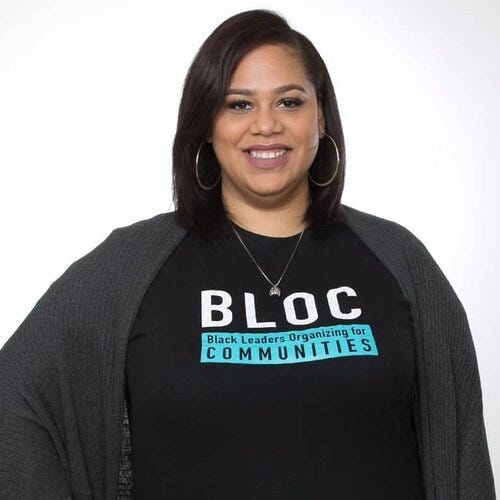
Angela Lang was born and raised in the heart of Milwaukee. She has an extensive background in community organizing. In the past, Angela served as both an organizer and State Council Director for the Service Employees International Union, working on such campaigns as the Fight for 15. Before founding BLOC, Angela was the Political Director with For Our Future Wisconsin. She is a graduate of Emerge Wisconsin. She currently is the Vice President of the ACLU of Wisconsin Board and sits on the board for Diverse and Resilient, a non profit organization that supports the LGBTQ community in Wisconsin, as well as on the board for the Milwaukee Parks Foundation.
Angela is motivated by making substantial and transformative change in her community while developing young, local leaders of color. Her journey in organizing hasn’t always been easy, but through it all she has remained a fierce advocate for securing more seats at the table for those who represent the New American Majority.
Colon is likely to announce soon.